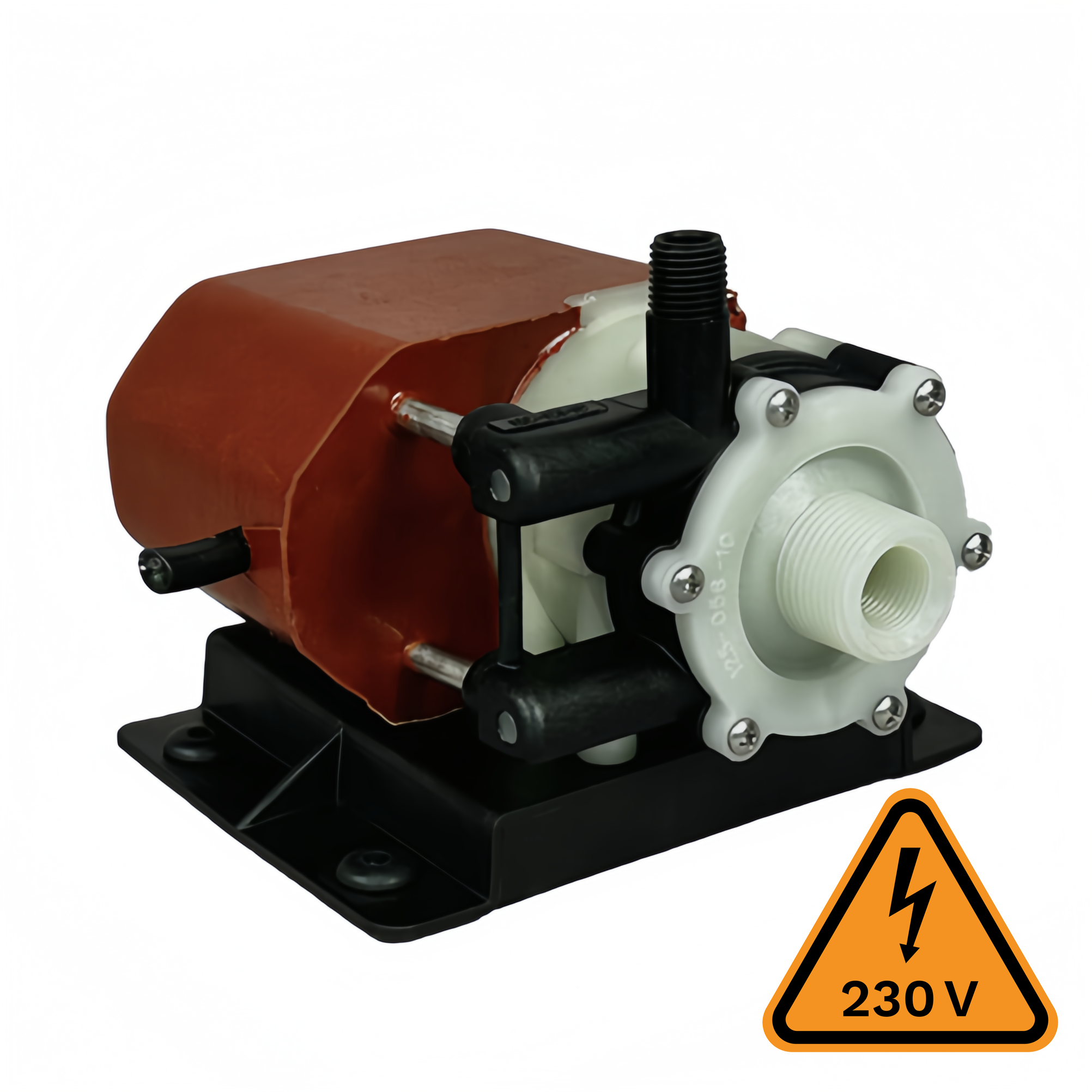
300 GPH 230V LC-2M-MD 50/60HZ SUBMERSIBLE MARCH PUMP
300GPH | 208-230V | MARCH PUMP | LC-2M-MD
In stock! Ships within 1-2 business days.
Marine Air Conditioner Pump
1- Year Manufacturing Warranty*
Couldn't load pickup availability
Pickup available at Miami, FL
Usually ready in 24 hoursThe LC-2M-MD is a 300GPH American submersible seal-less magnetic drive circulation pump. Built for marine environments, it is Ignition Protected per SAE J1171 and ISO8846.
Suitable for marine air conditioning units, salt water and fresh water applications.
If you have any questions, you are always welcome to contact us here.
We are happy to help!
-
Quick Shipping Information
For domestic orders within the United States you may complete checkout online. For international inquiries, please send us an email at support@marinaire.com.
-Signature is required on all orders over $500- For more information click here. -
Customer Support
-
Thinking about DC power?
We can help! Check out this helpful calculator.
-
Why MarinAire?
MarinAire sets the standard in the marine air conditioning industry with cutting-edge patented technology. Click here to learn more about our company.
FAQ
Which pump is right for me?
The information below applies only to MSWA brand marine air conditioning units and may not apply to other brands or systems.
For standard installations, each MSWA air conditioning unit requires its own circulation pump. Pump sizing depends on your MSWA unit capacity, installation layout, and plumbing run. Based on what most MSWA customers typically use, the following circulation pump sizes are common:
- MSWA 6,000–9,000 BTU units: most customers choose a 300 GPH circulation pump per unit
- MSWA 11,000–16,000 BTU units: most customers choose a 500 GPH circulation pump per unit
- MSWA 20,000–24,000 BTU units: most customers choose a 1,000 GPH circulation pump per unit
We carry two types of circulation pumps, and the correct choice also depends on where and how the pump is installed:
- Non-submersible pumps for dry, above-bilge installations (such as MarinAire magnetic-drive pumps)
- Submersible pumps for bilge installations (such as select March pumps)
(Note: the 1,000 GPH pump is not submersible)
Each pump has different head pressure ratings, and factors such as hose length, vertical lift, fittings, and bends all affect flow.
Using one pump for multiple MSWA units
Some installations use a single circulation pump to supply multiple MSWA units. In these cases, the pump must be sized by combining the required flow for each unit, and a pump relay panel is required to ensure proper operation.
Example:
Two MSWA 16K units (500 GPH each) would typically require a 1,000 GPH circulation pump and a compatible pump relay panel.
Proper sizing is critical:
- Undersized pumps may prevent one or more units from operating correctly or keeping up during peak heat
- Oversized pumps may require reducers or a ball valve to regulate flow depending on conditions
Because shared-pump systems are more dependent on plumbing layout and head pressure, we strongly recommend consulting a qualified marine air conditioning installer to confirm pump sizing and system design.

What is the difference between the March pump and MarinAire pump?
The main difference is how and where they are installed.
Most March pumps are submersible, meaning they are designed to be installed in the bilge or areas that have high moisture. (note** the TE-5M-MD 1000GPH pump is not submersible)
MarinAire pumps are non-submersible and designed for dry, above-bilge installations such as closets.
Both March and MarinAire pumps are ignition protected and magnetic drive and suitable for marine environments. The correct choice depends on your installation layout, available space, plumbing run, and head pressure requirements.
If you’re unsure which pump is best for your setup, checking the spec sheets of the pumps are recommended.
Can I use this for a different application besides marine air conditioning?
No. These circulation pumps are designed and intended specifically for marine air conditioning and marine water circulation systems.